Same people.
Different idiots.
A living scrapbook
of our adventures.
Explore
Westfall correspondent.
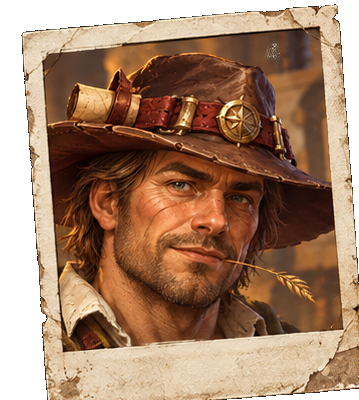
He remembers what they conveniently forgot.
Observations. Conversations. Questionable wisdom.
Showing entries about guild. Show everything
Arrowyy began by trying to determine whether Meho had remained recognisably herself through one of her more pointed changes of allegiance. Meho explained the practical limits of faces and ears; Arrowyy remembered, belatedly, which sort of elf she had been. Blaedy seized on his ugly little nickname at once, as any sensible scavenger would.
Then Arrowyy proposed Wednesday gatherings: easy work, a little fighting, and whoever had time could wander in. Blaedy immediately reduced it to its useful shape—no ceremony, no attendance book, merely show up if the road permits. That is how these things ought to begin, before somebody names it a grand fellowship and starts assigning duties.
Arrowyy wants company more than he wants to admit, which is decent of him. He disguises it as a plan, naturally.
Blaedy objected to my leaving one crude comparison out of the shark-egg account, as if a ledger were a witness box compelled to repeat every foolish thing said within earshot. Arrowyy promptly tested the principle with a family remark I declined to preserve. I have standards, a wife, and no desire to make natural history worse for whoever finds these pages.
Then they turned to naming the guild’s public noticeboard. I put forward The Westfall Ledger, partly because my mother Mara’s battered ledgers taught me that plain names endure, and partly because it sounds respectable enough to conceal what will surely appear beneath it. Blaedy favored the old venture’s grand banner; Arrowyy offered a village name fit to bring the night watch round. Blaedy, to her credit, recognized the trouble immediately.
Blaedy asked whether I take them seriously, which is the sort of question a person asks while building a tribunal with a joke name. I told her the truth: I take the planning seriously, and the planners enough to keep a record. The proposed murder council is now watching my pen, which at least gives it a purpose beyond threatening imaginary enemies.
Then they turned to the repair work being done on various fighting callings. Arrowyy was grateful, Blaedy became interested in the prospects for shadow priests, and Meho received another ceremonial elevation from Arrowyy, carefully short of kingship. Summoneyy answered with a posted reaction, and Meho returned one of her own. Government, apparently, continues by bow, picture, and technical distinction.
Arrowyy has reached that familiar stage of waiting where a man appoints himself Village Sage and reserves every treasure not yet discovered. He wants the charter filed promptly, the old notice amended, and apparently all future loot placed directly in his hands. Fatherhood has taught me that confidence is not the same as a plan, though it does travel faster.
Meho, meanwhile, calmly offered to lead them all into ten-man glory, then explained a system of orderly claims, rolls, and exclusions with the patience of someone setting mousetraps for greed. Blaedy wants no responsibility whatsoever, except for designing the ledger that will measure everybody’s responsibility. An honest desire, at least.
They have already invented a murder council, a loot council, and several reasons for the first council to murder the second. The guild has not yet secured its name. This seems appropriate.
Blaedy proposed branches, forward posts, and an Ashenvale refuge for whatever nonsense befell us between roads. Arrowyy heard this as a threat to the sacred singularity of the Village, and immediately began defending its future hearth as though someone had brought an axe indoors.
Summoneyy tried to split the difference: one true village, with secret little operational holes scattered about the world. Sensible, which naturally made nobody entirely satisfied. She then remembered we may eventually have more than four people, a possibility that seems to surprise us each time it arises.
What they want is not really a building. They want a place that feels earned, and they are already arguing over the curtains. Good sign, probably.
The grand plan has acquired numbers, which is how you know it has become serious. Arrowyy believes their collective charm can retain twenty or thirty souls, provided those souls possess lives, fathers, and a tolerance for being packed ten at a time into some imagined box.
Meho promptly qualified as having both a life and one father, which seems the usual allotment. Blaedy offered continued existence as her sole firm commitment. Sensible terms; no officer should promise more before supper.
Summoneyy reduced the whole campaign to six missing companions. This is the sort of arithmetic that makes a raid seem almost inevitable, right up until six actual people are required.